Cook
A food can look fully cooked and still be unsafe. Color and texture are not reliable. A food thermometer is the only way to know a food has reached a safe internal temperature.
Quick Reference
Safe Internal Temperatures
From FoodSafety.gov, the combined CDC, FDA, and USDA guidance for consumers. These four lines cover most weeknight cooking.
| Food | Safe Internal Temperature |
|---|---|
| All poultry | 165°F |
| Ground beef, pork, veal, lamb | 160°F |
| Beef, pork, veal, lamb (steaks, chops, roasts) | 145°F + 3-minute rest |
| Fin fish | 145°F |
These temperatures are intended for food preparation in the home. Commercial foodservice establishments should follow the applicable state or local food code.
Using a Food Thermometer
Where to Put the Probe
Placement decides whether the number you read means anything.
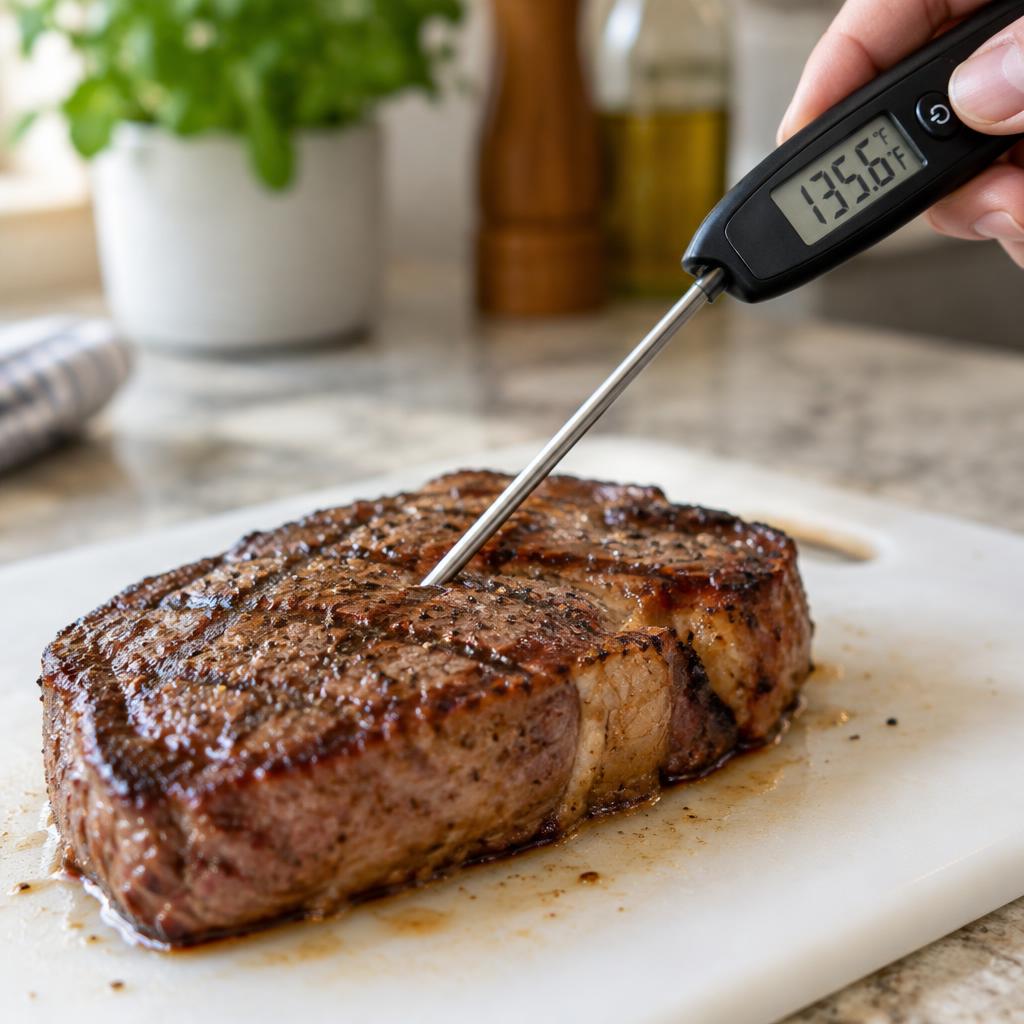
- Insert the thermometer at an angle into the thickest part of the food, away from bone and fat. You want the tip to be in the middle of the food.
- For a whole bird, check the innermost part of the thigh and wing, and the thickest part of the breast.
- For ground meat, check several spots.
- Wait for the reading to steady before recording it.
Hot Tip
If you are not serving hot food right away, keep it at 140°F or above.
Cooking Methods
Tips by Appliance
Each method has its own quirks. Follow these tips to cook food safely.
Microwave
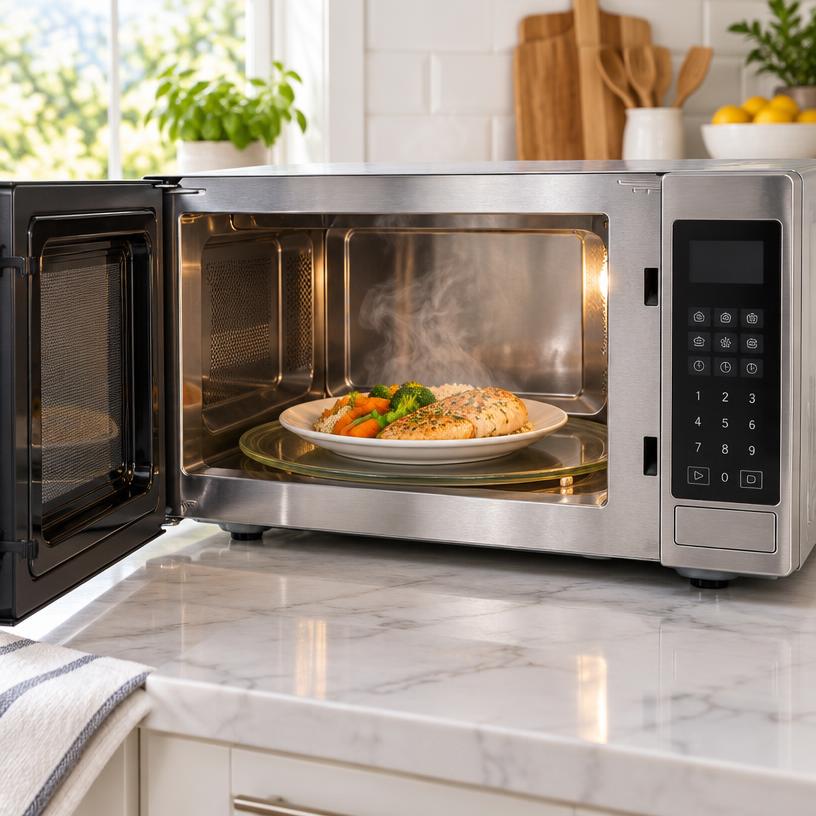
- Read and follow package directions exactly.
- Stir food partway through heating so it cooks evenly. Some commercially frozen foods are not designed to be stirred; follow the package.
- If the label says to let the food stand for a few minutes after cooking, do so. This lets heat spread into colder spots.
- Cook microwaved food to at least 165°F.
Source: USDA FSIS
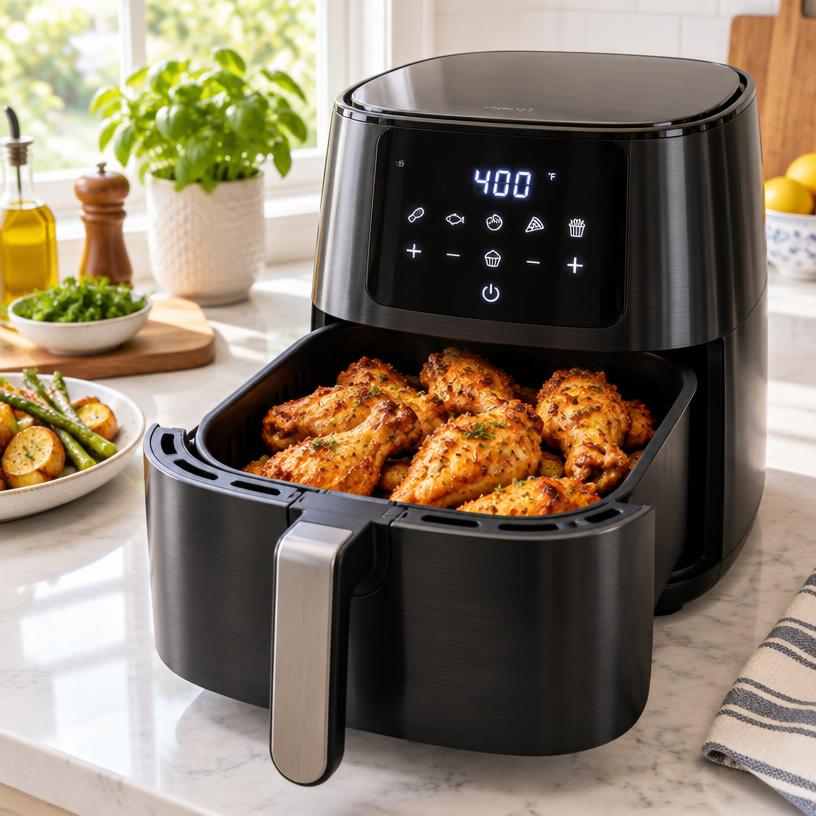
Air-Fryer
- Don’t crowd the basket. Hot air needs room to cook food evenly, so cook large amounts in batches.
- Follow package directions for air frying when they’re given.
- Don’t air fry raw, stuffed, breaded chicken breasts. They can look done outside and still be raw inside.
- Check doneness with a thermometer, and refrigerate leftovers within 2 hours.
Source: USDA FSIS
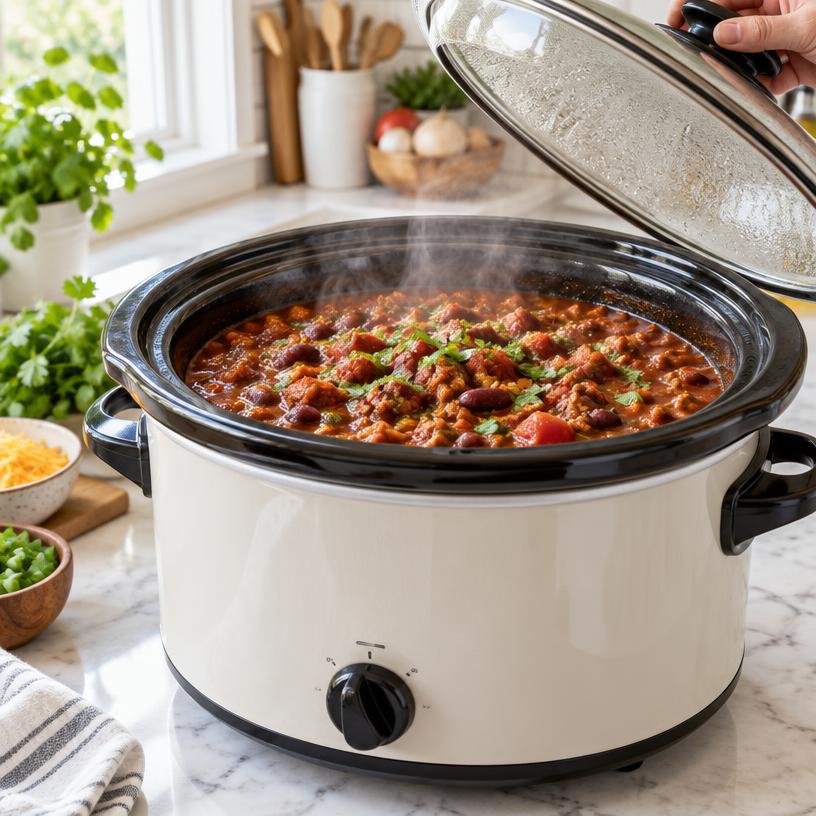
Crockpot
- Always thaw meat and poultry before it goes in the pot.
- Keep ingredients in the fridge until you’re ready to start. The cooker takes a while to get hot.
- Put vegetables in first, since they cook slower than meat.
- Don’t reheat leftovers in the crockpot. Reheat them on the stove or in the microwave to 165°F.
Source: USDA FSIS
The Bottom Line
Don’t Cook by Color
Browning, firmness, and clear juices are not proof that food is safe. Check the temperature, in the thickest part, and wait for the reading to steady.