Higher-Risk Groups
Some people are more likely to become seriously ill from a foodborne illness — including older adults. A few steady habits — cooking to the right temperature, keeping cold food cold, and choosing carefully — make a home kitchen measurably safer.
Who Is at Higher Risk
Five Groups That Need Extra Care
Pregnant Women
Germs like Listeria can pass to the baby, even when Mom feels fine.
Older Adults (65+)
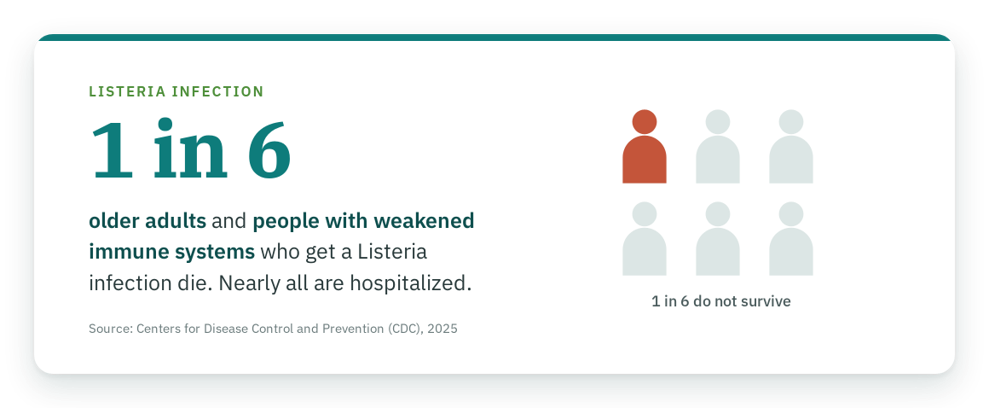
The immune system weakens and stomach acid drops with age, so fewer germs can make you sick.
Weakened Immune System
Cancer treatment, HIV/AIDS, or an organ transplant makes infections harder to fight.
Chronic Conditions
Diabetes, liver disease, or kidney disease can raise the risk of serious illness.
Anyone in these groups should take extra care with the foods below.
Choose Carefully
Foods to Avoid or Heat First
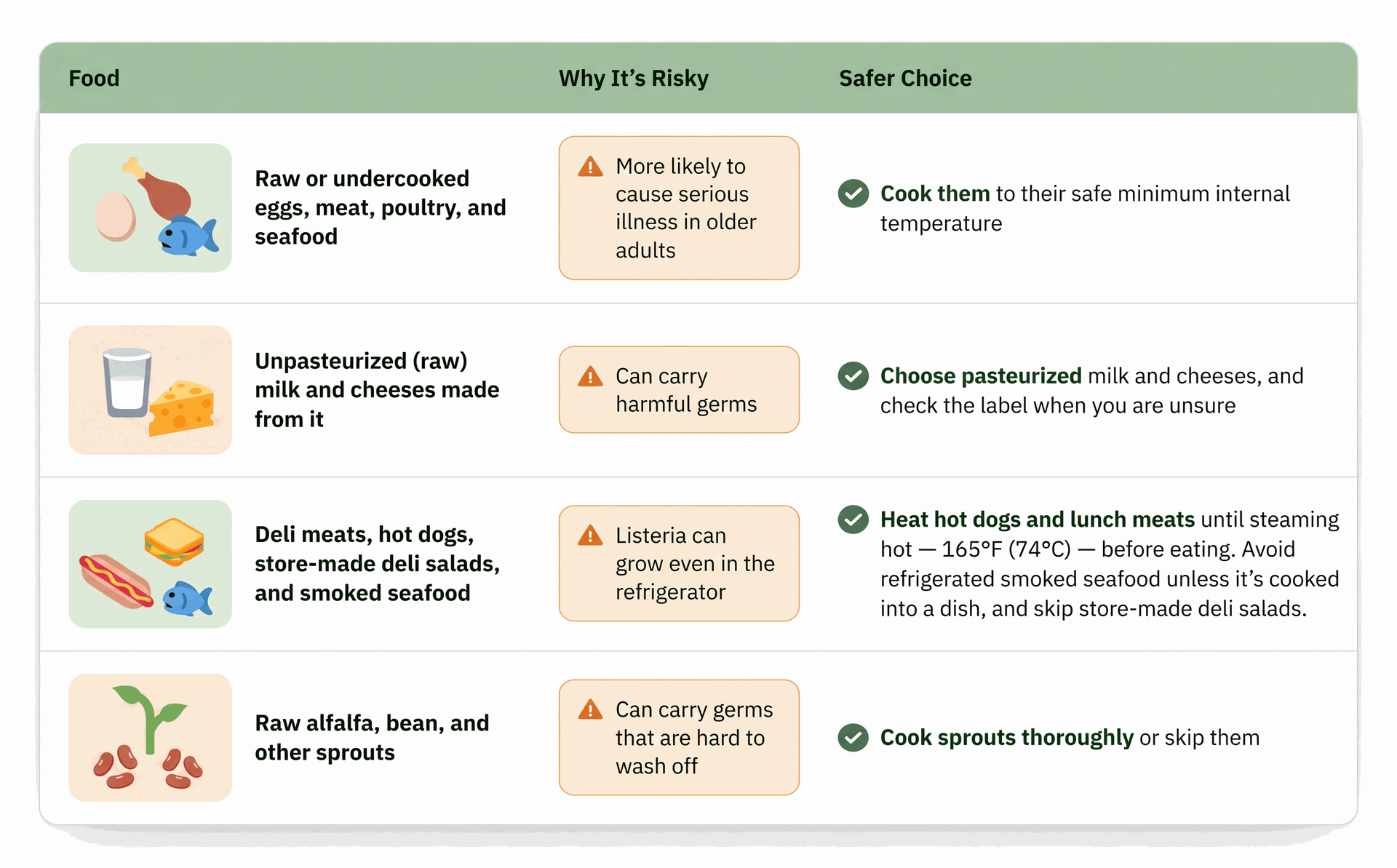
Some foods carry a higher risk. The simplest rule: if it is raw, unpasteurized, or ready-to-eat from the deli, heat it first or skip it.
Chill
Keep Cold Food Cold
Keep your refrigerator at 40°F (4°C) or below, and check it with an appliance thermometer. Refrigerate leftovers, takeout, and prepared food within 2 hours — or within 1 hour if it is 90°F (32°C) or hotter outside.
Talk with Your Provider
Your Safe-Food List Is Personal
A medication, a treatment, or a chronic condition can change which foods are safe for you. Bring this list to your health care provider and ask what it should look like for your household.