Allergen Safety for Home Cooks
Know the 9 major allergens, prevent cross-contact, read every label, and serve safely. If someone has a diagnosed allergy, follow their action plan.
Having a Reaction? What to Do Now
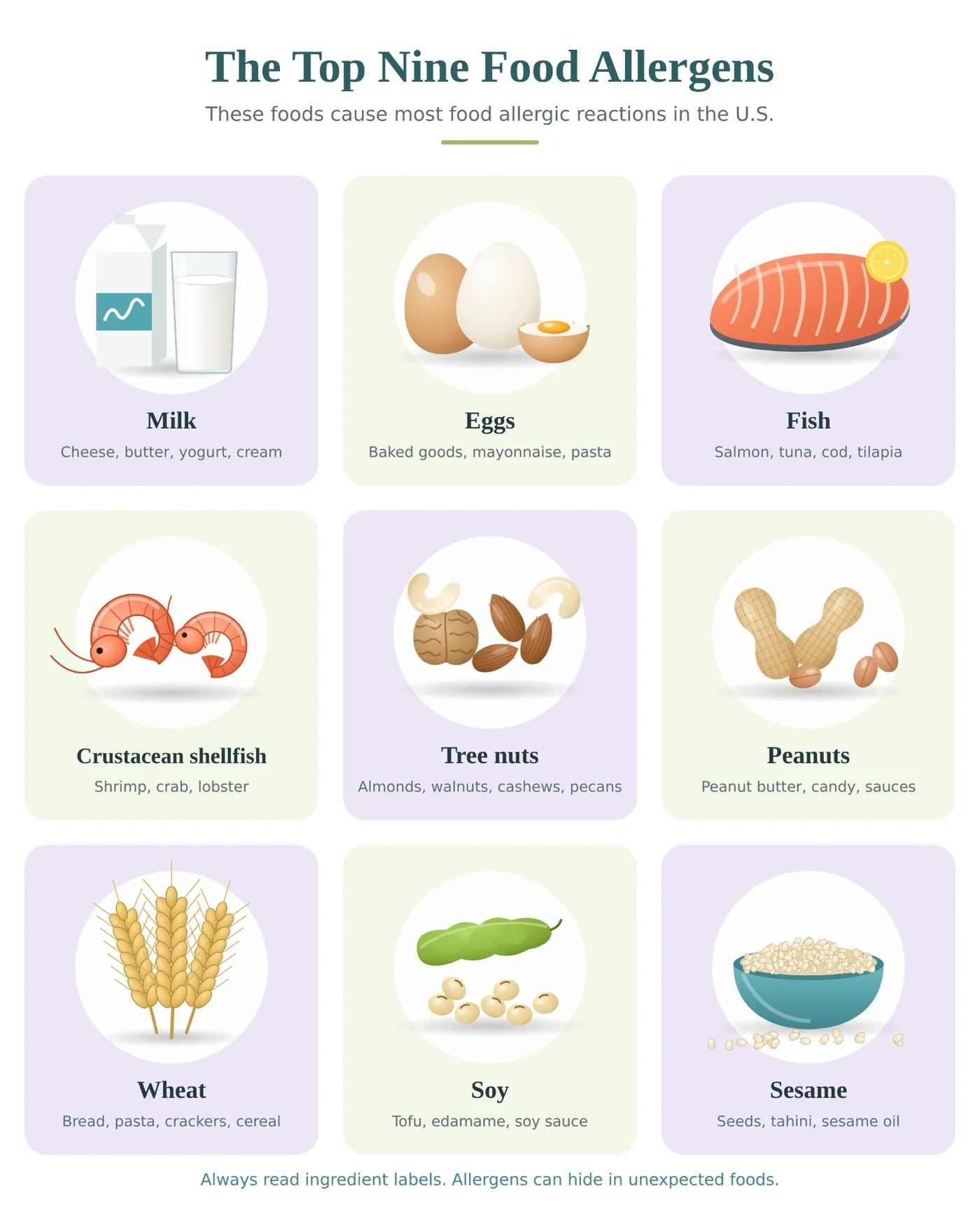
Top 9
U.S. food labels must name these 9 major allergens, which cause most serious reactions.
33 Million
More than 33 million people in the U.S. have food allergies, according to FARE.
Sources: U.S. Food and Drug Administration (FDA), Food Allergies; Food Allergy Research & Education (FARE), Facts and Statistics.
Know the Risk
A Trace Amount Can Trigger a Reaction
Cooking doesn’t destroy allergens. A trace left on a cutting board, spoon, or pan can cause a serious reaction, so preventing cross-contact is the key to allergen safety at home.
Hidden Sources
Where Allergens Hide
Most reactions at home start with a food nobody suspected.
| Where | Watch For |
|---|---|
| Sauces and Dressings | Fish in Caesar dressing and Worcestershire sauce; peanuts in satay sauce; wheat in most soy sauce |
| Baked Goods and Breads | Milk, eggs, soy, wheat, and sesame, including egg washes and sesame on buns |
| Processed and Packaged Foods | Soy lecithin, milk powder, and wheat starch in crackers, soups, and mixes |
| Non-Food Items | Soy, fish oil, or milk in pet food, lip balm, vitamins, and medications |
Cross-Contact Prevention
Keep Allergens Away from Safe Food
Cross-contact happens when an allergen touches food meant to be allergen-safe. After that, the food isn’t safe to serve.
Start Clean. Wash your hands for 20 seconds, then clean and sanitize every surface and tool first.
Use Dedicated, Clean Tools. Use freshly washed pans, boards, and utensils. Wiping them off isn’t enough.
Cook the Allergen-Safe Food First. Then cover it and keep it away from splashes and crumbs.
Use Fresh Oil and Water. Never fry or boil allergen-safe food in oil or water used for other foods.
Keep Condiments Separate. A knife from the peanut butter makes the jelly unsafe. Use squeeze bottles or a clean knife.
Label Reading
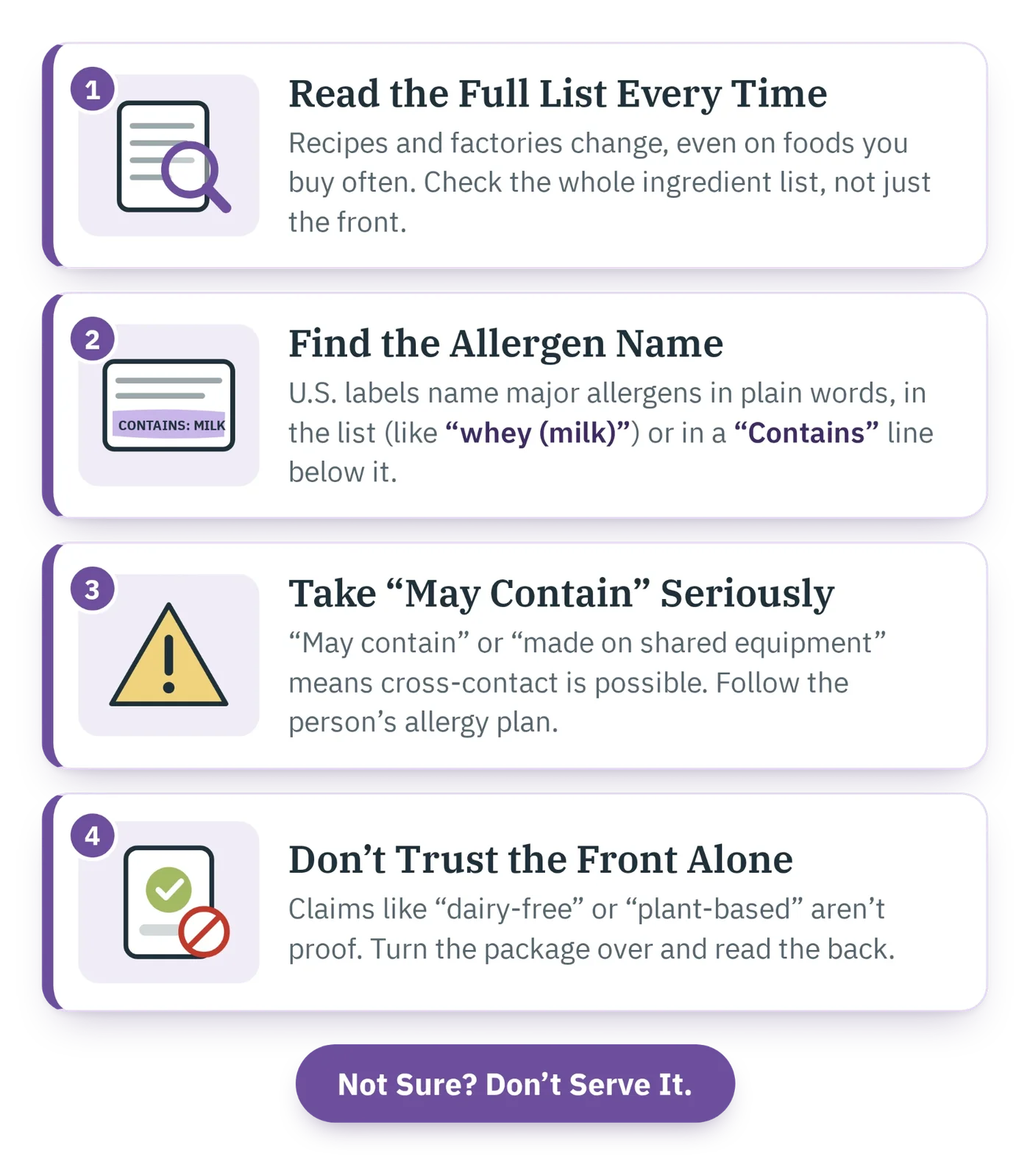
Read Every Label, Every Time
Ingredients can change, even on foods you buy often. Read the full label every time.
Safe Food Preparation
Cook, Serve, and Store with Confidence
Keep allergen-safe food separate and clearly marked from prep to plate.
Store Safe Foods Separately. Use sealed, labeled containers on a shelf above foods that could drip.
Mark Safe Portions. Use a different plate, a label, or a separate serving dish.
Ask Before You Serve. Confirm guests’ allergies before you plan the meal.
Clean Up After the Meal. Wash every surface and tool that touched the allergen, including the table and chairs.
Know the Signs
Act Fast If a Reaction Starts
Reactions can start within minutes of eating. Signs can be mild at first and get worse quickly.
Food allergy reactions can be life-threatening. If someone shows signs of a serious reaction, use their prescribed epinephrine and call 911.
Call 911For full guidance, see FARE’s Food Allergy & Anaphylaxis Emergency Care Plan.