Step 2 of 4
Separate
Germs can spread from raw meat, poultry, seafood, or eggs to other foods. Keep them apart at every stage: shopping, storage, prep, and serving.
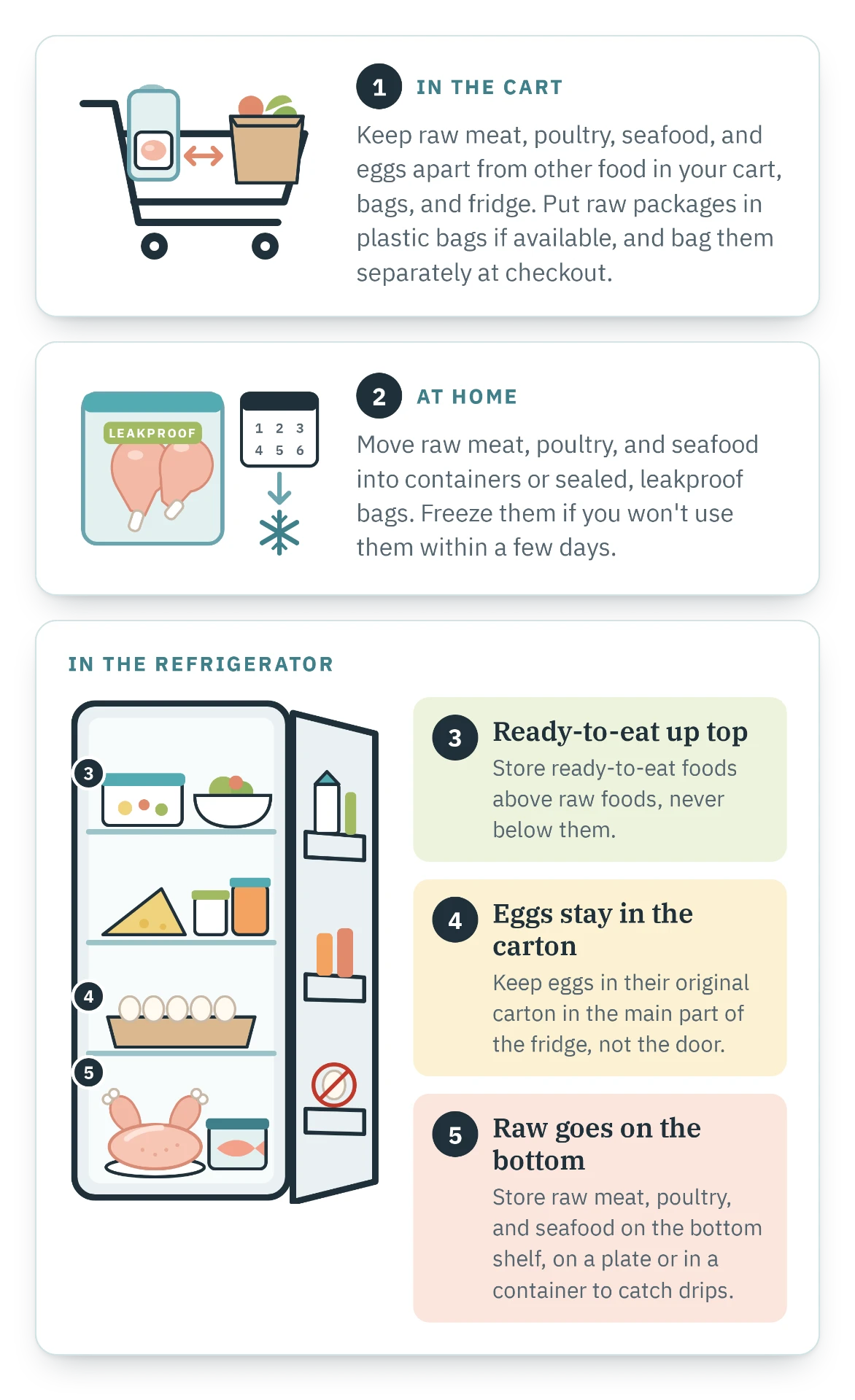
Give Raw Foods Their Own Space
Separation begins in the cart and carries through to the shelf your food sits on at home.
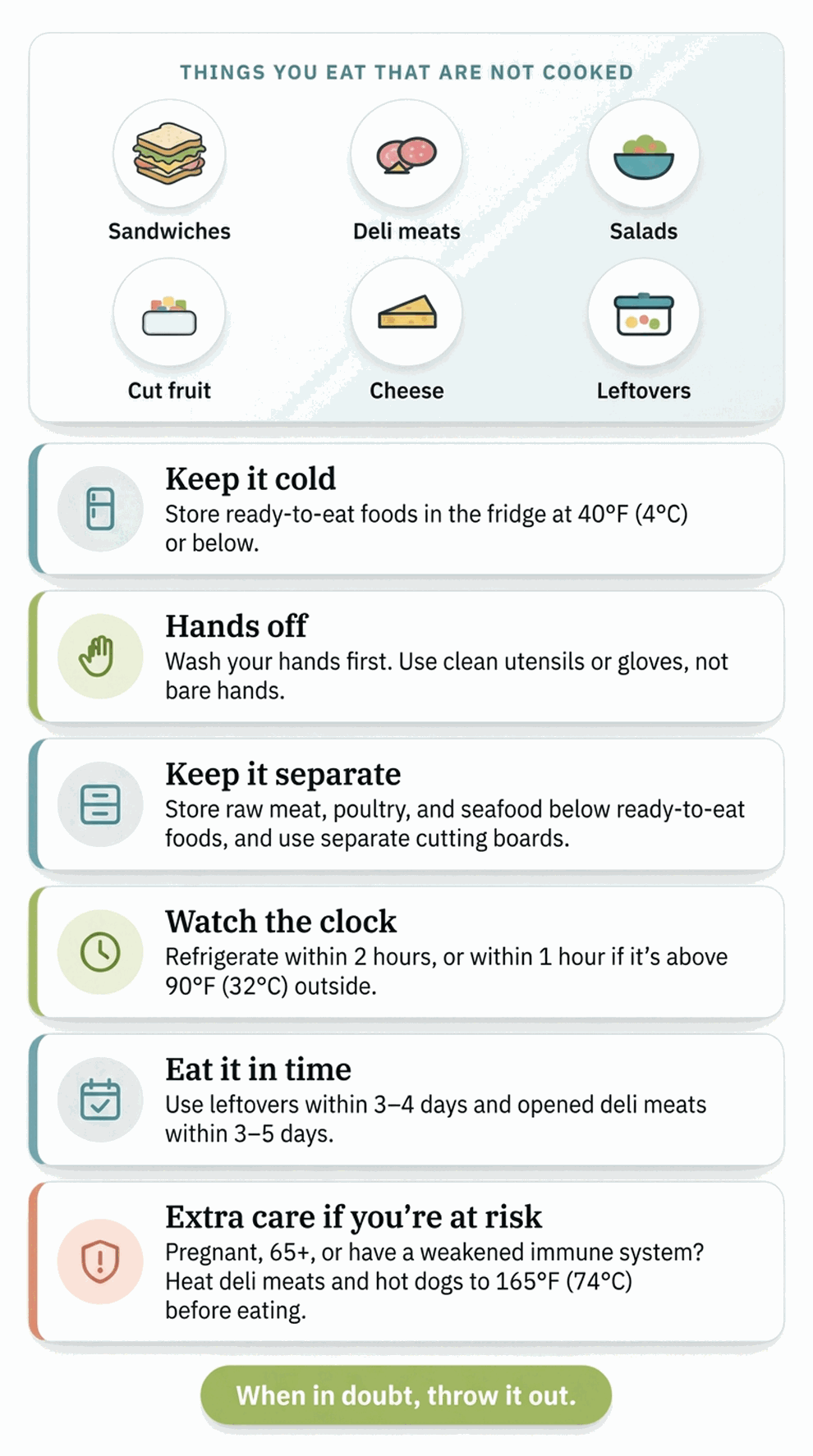
Keeping Ready-to-Eat Foods Safe
Foods eaten without cooking — sandwiches, deli meats, salads, cut fruit, cheese, and leftovers — need extra care to stay safe.
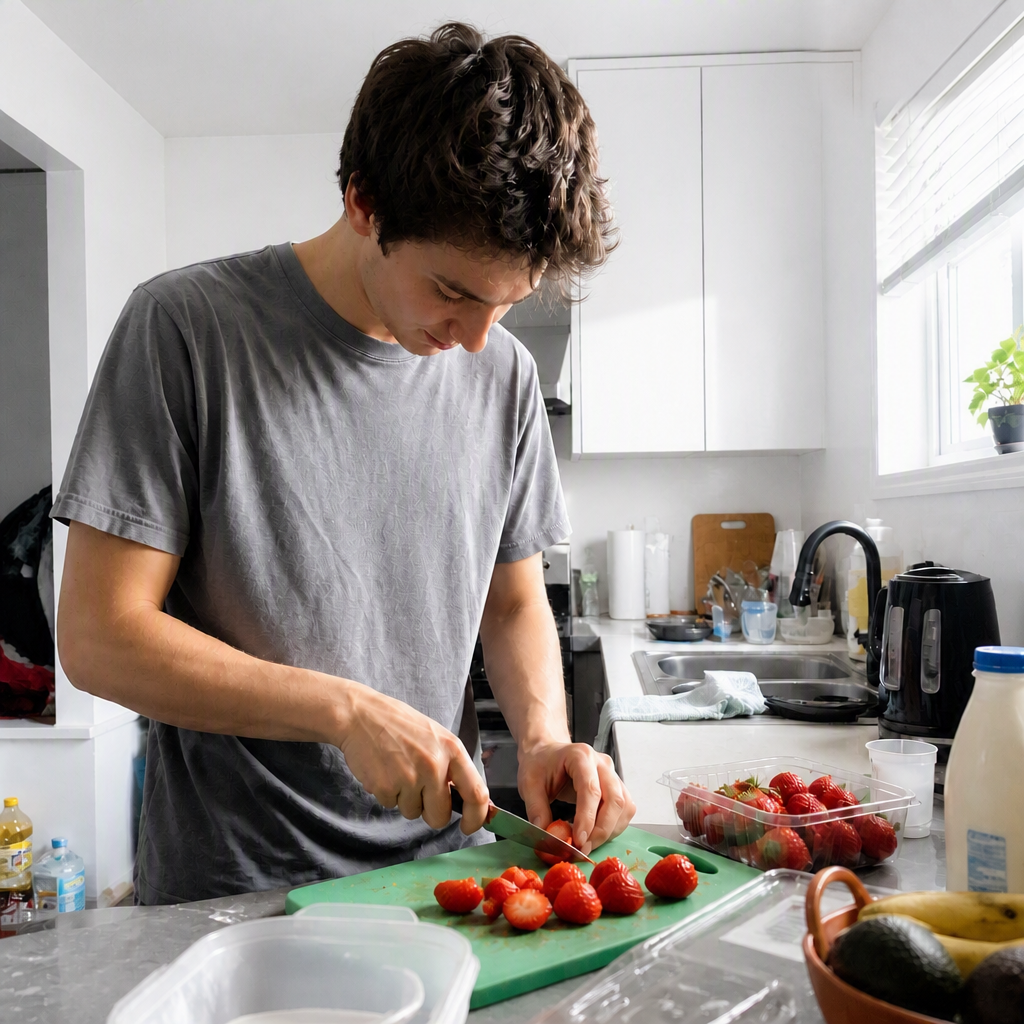
Use the Right Board for the Job
Tools move germs around a kitchen faster than anything else. Decide in advance which board belongs to raw food.
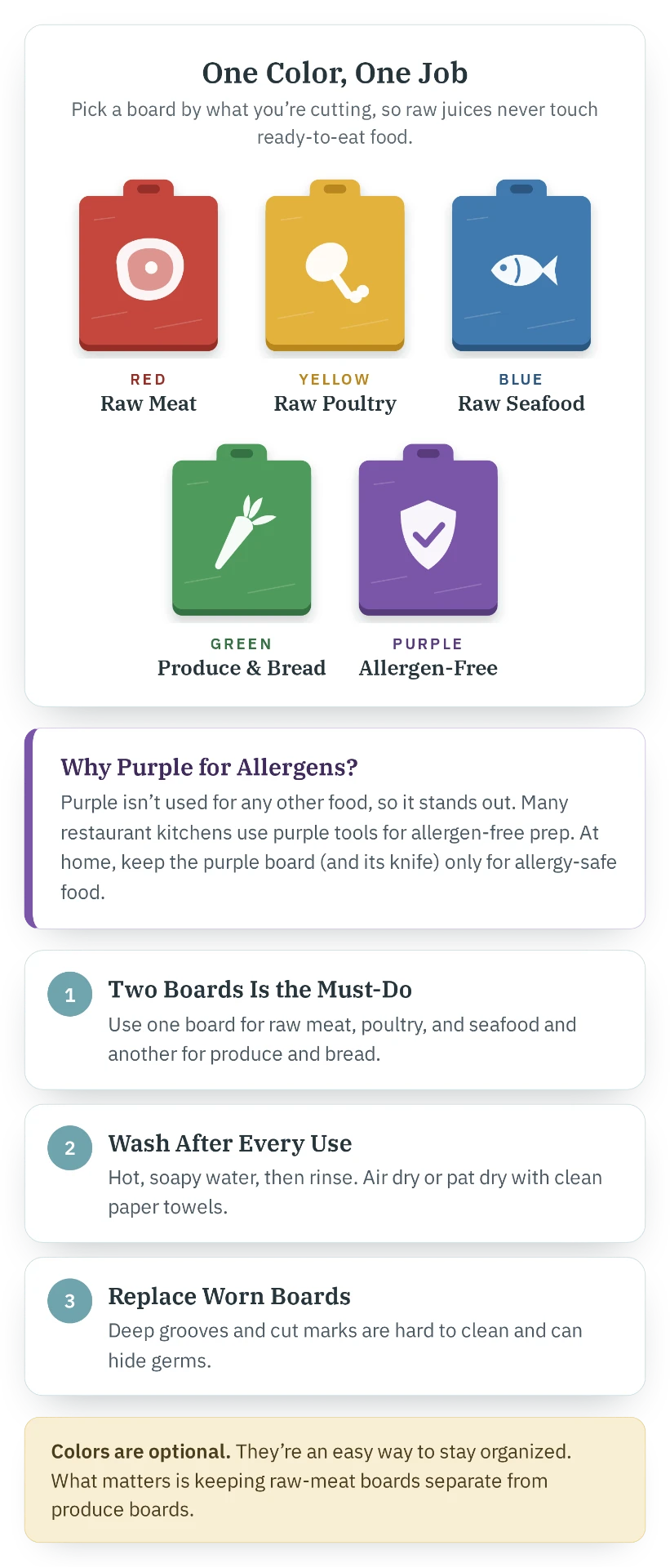
Source: USDA FSIS, Cutting Boards and Food Safety
Plates, Utensils, and Marinades
- Use separate plates and utensils for cooked and raw foods.
- Never put cooked food on a plate that held raw food unless the plate has been washed with hot, soapy water first.
- Do not reuse a marinade that touched raw food. USDA allows reuse only if you bring it to a full boil first; the simpler home rule is to make a fresh batch for serving.
The Simple Rule
Raw Below, Ready-to-Eat Above
Anything raw sits below anything that will be eaten without cooking. If a drip could land on it, move it up.